The best HR leaders respond to this pressure by investing in continuous, structured learning. Books remain one of the highest-leverage formats for that — they build the conceptual depth that separates transactional HR from genuine strategic leadership.
This list of 26 books spans HR strategy, culture, analytics, DEIB, and leadership fundamentals. Whether you're a first-year HR coordinator or a seasoned Chief People Officer, there are titles here matched to where you are right now.
Key Takeaways
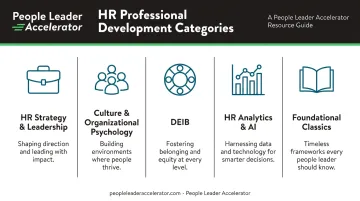
- Five categories organize this list: HR Strategy & Leadership, Culture & Organizational Psychology, DEIB, HR Analytics & AI, and Foundational Classics — covering the full scope of modern people leadership
- Both new releases and timeless titles are included — the best HR leaders blend proven frameworks with emerging thinking
- Every book was selected for practical applicability, not just theory — prioritizing what you can actually implement
- Career-stage relevance varies across the list, with titles suited for early practitioners through senior people leaders
Why HR Books Still Matter in an AI-Powered World
AI is reshaping how HR operates — from recruiting automation to people analytics dashboards. But McKinsey identifies judgment, empathy, and trust-building as fundamentally human capabilities that no tool replaces in leadership. The case for structured learning through books isn't weakened by AI adoption; if anything, it's strengthened.
SHRM's 2025 workplace research found that leadership and manager development was the top priority for 41% of HR professionals — and 91% of L&D professionals regard continuous learning as essential. That's the context in which this list was built.
Reading books by leading HR practitioners and researchers builds conceptual depth — the kind that separates compliance-focused HR from genuinely strategic people leadership. The 26 titles below cover everything from organizational culture and people analytics to workforce planning and the future of work, giving you frameworks you can apply immediately.
26 HR Books Every HR Professional Should Read in 2026
HR is shifting fast — from a support function to a strategic driver of business outcomes. Whether you're navigating workforce planning, building a performance culture, or preparing for AI's impact on your organization, the right books can accelerate your thinking and sharpen your practice.
The 26 titles below are organized into five thematic categories. Use that structure to prioritize based on your current development needs or organizational challenges — not to read sequentially from cover to cover.
HR Strategy, Leadership & Management
Book 1: HR from the Outside In — Dave Ulrich, Jon Younger, Wayne Brockbank, and Mike Ulrich
Dave Ulrich is the Rensis Likert Professor at Michigan Ross and a partner at the RBL Group; Wayne Brockbank is Clinical Professor Emeritus at Michigan Ross. Together with their co-authors, they define six core HR competencies in this 2012 McGraw-Hill title: strategic positioner, credible activist, capability builder, change champion, HR innovator and integrator, and technology proponent.
The book's central argument is that HR must be defined from the outside in — starting with business context, customer needs, and investor expectations — rather than from internal processes outward. If you only read one book on HR's strategic role, this is the one.
Book 2: The HR Scorecard — Brian Becker, Mark Huselid, and Dave Ulrich
Published in 2001 by Harvard Business Review Press, this book builds a rigorous framework for linking HR practices directly to business strategy and performance outcomes. Mark Huselid is now Distinguished Professor of Workforce Analytics at Northeastern University and founding director of its Center for Workforce Analytics, a role that traces directly back to the ideas this book put into motion.
The core argument: HR accountability must be measurable. In 2026, when 94% of business leaders say people analytics elevates the HR profession, this book reads less like history and more like a blueprint still being implemented.
Book 3: People Strategy — Jack Altman
Jack Altman co-founded Lattice, one of the most widely used people management platforms, before writing this 2021 Wiley title. His argument is that people strategy shouldn't live inside the HR function — it should be integrated into every layer of business planning, treated as a genuine competitive input alongside product, finance, and go-to-market decisions.
The book covers values alignment, engagement data, feedback systems, and how to connect culture-building to measurable business growth. The framing is deliberately executive-facing, which makes it useful for HR leaders preparing for budget conversations, board presentations, or C-suite alignment work.
Book 4: Victory Through Organization — Dave Ulrich, David Kryscynski, Wayne Brockbank, and Mike Ulrich
Published in 2017 by McGraw-Hill, this book draws on a large-scale competency study of HR professionals and leaders to show how HR can simultaneously create value for employees, the business, investors, and communities. The research base is substantial — the data quantifies the organizational returns that HR capability investment produces, rather than asserting them.
That evidence base is exactly what HR leaders need when making the internal case for seat-at-the-table investment.
Book 5: Scaling for Success — Andrew Bartlow and Brad Harris, Ph.D.
This is one of the most directly practical books on this list for HR professionals in startups, scale-ups, and PE-backed companies. Published by Columbia University Business School Press in 2021, it brings together two People Leader Accelerator faculty members with complementary depth:
- Andrew Bartlow — 25 years of HR and talent experience spanning private equity, venture advisory, and practitioner roles
- Brad Harris, Ph.D. — Associate Dean of MBA Programs at HEC Paris, with research in the Academy of Management Journal and Journal of Applied Psychology
That combination of practitioner urgency and academic rigor shows in the content. The book addresses people priorities, sequencing decisions, and organizational design challenges specific to companies growing fast under pressure — not generic HR theory dressed up for startups.
Book 6: The New HR Leader's First 100 Days — Alan Collins
Alan Collins is a former VP of HR at PepsiCo who has since built a career helping HR leaders accelerate their transitions. This 2017 book provides 17 actionable rules for new HR leaders — covering how to build credibility quickly, establish relationships with key stakeholders, diagnose organizational culture, and deliver early wins.
It's specifically designed for the leadership transition moment, making it essential for any HR professional stepping into a director, VP, or CHRO role for the first time.
Book 7: Radical Candor — Kim Scott
Kim Scott managed teams at Google and worked closely with Apple's leadership before writing this book. The framework is straightforward on its surface: care personally and challenge directly. Most managers do one or the other; the book makes a compelling case that doing both simultaneously is what produces high-trust, high-performance cultures.
The fully revised 2019 edition (St. Martin's Press) sharpens the original's application for managers at every level. For HR leaders responsible for coaching managers and embedding feedback culture, this is required reading.
Book 8: Dare to Lead — Brené Brown
Brené Brown is a Research Professor at the University of Houston Graduate College of Social Work, and this 2018 Random House book draws on seven years of research on brave leadership. Her central argument — that vulnerability and courage are not weaknesses but teachable skill sets — directly challenges the stoic, armor-up leadership archetypes that still dominate many organizations.
The four courage-building frameworks are research-backed and structured for facilitation, which is why this book shows up on so many HR-led leadership development programs.
Culture, Organizational Psychology & People Operations
Book 9: The Fearless Organization — Amy C. Edmondson
Amy Edmondson is the Novartis Professor of Leadership and Management at Harvard Business School, and her work on psychological safety spans decades of organizational research. This 2018 Wiley book reframes psychological safety as a measurable climate condition — not a soft concept or feel-good aspiration — with practical frameworks HR leaders can use to assess and improve team performance.
The distinction matters. Most organizations acknowledge psychological safety in theory while doing little to measure or build it deliberately. Edmondson gives HR the tools to change that.
Book 10: The Culture Code — Daniel Coyle
Coyle spent years studying the world's most successful team cultures — from Pixar and the San Antonio Spurs to SEAL Team Six and IDEO — and distilled three core skills that leaders can build: creating safety, sharing vulnerability, and establishing purpose. Published in 2018 by Bantam Books, it's one of the most empirically grounded books on culture available to practitioners.
For HR professionals designing culture strategy, The Culture Code offers both the research base and the specific behaviors that distinguish cohesive, high-performing organizations from those that merely talk about culture.
Book 11: No Rules Rules — Reed Hastings and Erin Meyer
Reed Hastings co-founded Netflix; Erin Meyer is a professor at INSEAD. Together, they document Netflix's unconventional approach to people management: building talent density, embracing radical transparency, and extending freedom and responsibility to employees in ways most companies won't attempt.
Published in 2020 by Penguin Press, it's not a blueprint for every company — but for HR leaders in high-growth organizations, the question it forces is worth sitting with: what policies exist because of actual risk, and which exist out of habit?
Book 12: Drive — Daniel H. Pink
Pink's framework — autonomy, mastery, and purpose as the three drivers of intrinsic motivation — has held up well since publication. Pink draws on decades of behavioral science research, and the implications for HR are direct: most performance management, compensation, and career development systems are built around external rewards that undermine the very motivation they're meant to generate.
If you're redesigning any of those systems in 2026, Drive belongs on your desk. That same logic extends to how you structure people decisions at the organizational level — which is where Collins picks up.
Book 13: Good to Great — Jim Collins
Collins and his research team analyzed thousands of companies to identify what separates sustained great performance from mediocrity. The most HR-relevant finding: great companies prioritize people decisions first — getting the right people in the right seats — before deciding where to take the organization.
Published in 2001 by HarperBusiness, Good to Great remains directly applicable to talent strategy and workforce planning, particularly for HR leaders working alongside executive teams on organizational design.
Book 14: Multipliers — Liz Wiseman
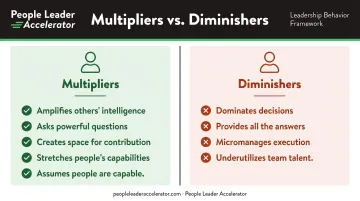
Wiseman, who leads the Wiseman Group and previously served as VP of Oracle University, studied hundreds of leaders to identify a pattern: some amplify the intelligence and capability of people around them (Multipliers), while others unintentionally shut it down (Diminishers). The revised 2017 HarperBusiness edition adds updated research and application guidance.
For HR professionals designing leadership development programs or coaching individual managers, the Multiplier/Diminisher framework gives you specific, observable behaviors to work with — not just leadership philosophy.
Diversity, Equity, Inclusion & Belonging (DEIB)
Book 15: Belonging at Work — Rhodes Perry
Rhodes Perry is the founding CEO of Rhodes Perry Consulting and holds an MPA from NYU. His book makes the case that belonging — not diversity representation alone — is the future of inclusive work. The distinction matters: organizations can hit demographic diversity targets while still producing environments where many employees feel unseen or excluded.
The book equips HR professionals with strategies to move from policy compliance to genuine cultural inclusion, covering the everyday actions that make belonging a lived experience rather than a stated value.
Book 16: Inclusion — Jennifer Brown
Published in 2017, Jennifer Brown's framework addresses how to build authentic allyship and accountability at every organizational level — not just among senior leaders or designated DEIB champions. Brown is the founder and CEO of Jennifer Brown Consulting.
What makes it especially useful for HR practitioners is its focus on behavior change over awareness campaigns. Brown's approach helps HR leaders design DEIB programs that shift how people actually act, not just what they say.
Best for: HR leaders building DEIB programs, designing allyship training, or trying to move their organization past surface-level inclusion initiatives.
Book 17: Good Guys — David Smith and W. Brad Johnson
Where Brown focuses on individual allyship broadly, Good Guys targets a specific and often underdeveloped lever: equipping male leaders to become active allies for women at work. David Smith (U.S. Naval War College) and W. Brad Johnson (Professor Emeritus, U.S. Naval Academy) published this research-based guide through Harvard Business Review Press in 2020.
For HR professionals building male allyship programs or holding leadership accountable in DEIB initiatives, the book delivers concrete behavioral frameworks — not just awareness exercises. Each chapter includes specific actions male leaders can take at the individual, team, and organizational level.
HR Analytics, AI & Data-Driven HR
Book 18: Work Rules! — Laszlo Bock
Bock led People Operations at Google — one of the most data-driven HR functions ever built — before writing this book. He reveals the evidence-based philosophy behind Google's people practices, including performance calibration and radical transparency as a driver of high-trust culture.
The structured interviewing framework alone is worth the read: Google's own research shows it saves 40 minutes per interview while improving candidate experience. For HR professionals wanting to see data-driven people management in practice, Work Rules! is the closest thing to a field manual.
Book 19: Predictive HR Analytics — Martin R. Edwards and Kirsten Edwards
Now in its third edition (2024, Kogan Page), this book is frequently used as a course text in HR analytics education — it appears on syllabi at King's College London and other institutions. The Edwards cover analytical frameworks across recruitment, turnover, DEIB, and performance, building the analytical foundation many HR professionals lack.
For HR teams building data capability from scratch, this is the most rigorous starting point on this list.
Book 20: Data-Driven HR — Bernard Marr
Bernard Marr is an analytics adviser and Forbes contributor whose second edition (2023, Kogan Page) connects HR metrics across engagement, recruitment, performance, and wellbeing directly to business outcomes. It's written specifically for HR professionals without a technical or statistical background — which is exactly what makes it useful.
If Predictive HR Analytics is the graduate course, Data-Driven HR is the accessible entry point — one that makes the case for metrics-based HR leadership without assuming prior quantitative expertise.
Book 21: Artificial Intelligence for HR — Ben Eubanks
Ben Eubanks is Chief Research Officer at Lighthouse Research & Advisory, and the third edition of this book (2025, Kogan Page) is the most current and comprehensive guide to AI integration in HR available. It covers:
- Responsible AI and data governance frameworks
- How to evaluate and select AI tools for HR functions
- Managing employee concerns and executive pressure around adoption
The through-line throughout: AI should free HR talent for strategic work, not replace human judgment. If you're navigating vendor decisions or building an internal AI policy, this is where to start.
Book 22: The Talent Delusion — Tomas Chamorro-Premuzic
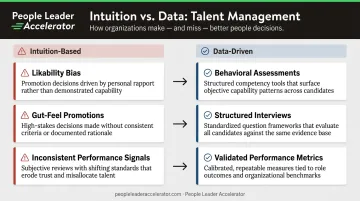
The core argument of this 2017 Piatkus book: most organizations are poor at identifying, measuring, and developing talent — not because they lack effort, but because they rely on the wrong signals. Chamorro-Premuzic, an Honorary Professor at University College London, systematically dismantles intuition-based talent management with research-backed alternatives.
Key distinctions the book draws:
- Why "likable" and "high-potential" are not the same signal
- How to separate "normal" high performers from genuinely exceptional talent
- Where structured assessment outperforms managerial instinct
For HR leaders working on talent assessment or succession planning, it's a productive challenge to how most organizations actually operate.
Foundational Classics & Must-Read Essentials
Book 23: Human Resource Management — Gary Dessler
Pearson associates Dessler with Florida International University, and the 17th edition (2023) of this textbook remains the most comprehensive single-volume reference in the field. It covers recruitment and placement, training and development, compensation, and employee relations.
It's not designed for cover-to-cover reading — think of it as the reference you pull when you need depth on a specific core topic.
Early-career HR professionals and those transitioning from other functions will get the most from it, though experienced practitioners use it as a check against gaps in their foundational knowledge.
Best for: Early-career HR professionals and generalists building foundational depth.
Book 24: The Essential HR Handbook — Sharon Armstrong and Barbara Mitchell
The 10th anniversary edition (2019, Career Press) is exactly what the title promises: a practical, desk-side reference loaded with tools, checklists, sample forms, and guidance across social media recruiting, compliance, onboarding, and compensation.
Where Dessler provides depth, this book provides speed. For HR generalists and coordinators who need to navigate a specific challenge quickly, it's the most practical title on this list.
Best for: HR generalists and coordinators who need fast, actionable answers.
Book 25: HR Disrupted — Lucy Adams
Lucy Adams is CEO of Disruptive HR and the former BBC HR Director. The updated 2021 edition (Practical Inspiration Publishing) challenges HR professionals to rethink the fundamental relationship with employees: treating them as adults, consumers, and humans rather than as a risk to be managed.
Adams draws on her experience transforming the BBC's HR function to argue for a more agile, employee-centric approach to HR delivery. For HR professionals who feel their function has become over-engineered or disconnected from the people it serves, this book reframes the problem clearly.
Best for: HR professionals ready to challenge how their function is structured and delivered.
Book 26: The Way of the HR Warrior — Monica Frede and Keri Ohlrich
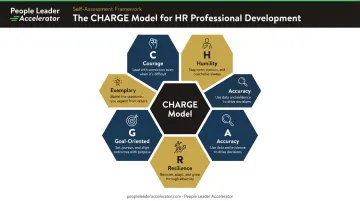
Keri Ohlrich, PhD, is an Abbracci Group co-founder with over 20 years in HR. Published in 2018 by LifeTree Media, this tough-love guide introduces the CHARGE model as a self-assessment and development framework for HR professionals: Courage, Humility, Accuracy, Resilience, Goal-Oriented, Exemplary.
It's designed for HR professionals who want to become stronger strategic leaders and are willing to be honest about where they currently fall short. Unlike most leadership books, it reads as a working self-assessment tool — structured around honest gaps, not aspirational frameworks.
Best for: HR professionals pursuing strategic leadership who want structured, honest self-development.
How We Selected These 26 HR Books
Every book on this list was chosen against three criteria:
- Practical applicability for working HR professionals, not just academic interest
- Relevance to 2026's most pressing challenges — AI adoption, hybrid work, organizational scaling, DEIB, and data-driven decision-making
- Author credibility as either a proven practitioner or researcher with documented real-world results
The list also reflects the perspective of People Leader Accelerator's faculty, a team with over 85 combined years of HR and talent experience spanning startups, enterprise, academic research, and high-growth tech.
Their backgrounds shaped every pick:
- Andrew Bartlow — 25 years as a practitioner, PE operating partner, and venture advisor
- Brad Harris, Ph.D. — academic research expertise from HEC Paris
- Carmela Krantz — first VP of HR at nine companies, including six startups
- Marie Szuts — led people operations at Figma during a period of rapid growth
That range of experience is why this list holds up at any level — from first-time HR managers to seasoned CHROs.
Conclusion
Reading only translates into impact when it changes what you do. Treat this list as a toolkit, not a checklist — draw from it based on your current organizational challenge, career stage, or the gap you most need to close.
Applying these frameworks is where the real work begins. People Leader Accelerator offers practitioner-led programs and peer cohorts that help HR and people leaders translate strategic concepts into organizational results — particularly in high-growth environments where the stakes are highest.
Frequently Asked Questions
What are the best HR books to read?
Work Rules!, The Fearless Organization, and Radical Candor are standout titles that consistently deliver practical value. The right starting point depends on your role, career stage, and the specific challenge you're working through.
What are the 7 main principles of HR?
The commonly cited core HR principles are staffing, development, compensation, safety, employee relations, compliance, and organizational effectiveness. The HR Scorecard and HR from the Outside In cover the broadest range of these areas.
Is HR still in demand?
Yes. The BLS projects 6% growth for HR specialists and 5% for HR managers through 2034, with roughly 81,800 specialist openings annually. Strategic HR, people analytics, and HRBP roles are seeing the strongest demand.
Which HR books are best for beginners?
Human Resource Management by Gary Dessler and The Essential HR Handbook by Armstrong and Mitchell are the strongest foundational starting points. Both provide broad, practical coverage of core HR functions without assuming prior professional experience.
How often should HR professionals update their reading list?
At least once a year. The field moves quickly, particularly in AI adoption, workforce analytics, and organizational design, and reading priorities that made sense two years ago may not address your current challenges.
What HR books are best for senior HR leaders and CHROs?
HR from the Outside In, Scaling for Success, Victory Through Organization, and People Strategy are the most relevant for senior and executive HR leaders. Each addresses strategic positioning, business alignment, and organizational impact at the CHRO level.