
Introduction
HR leaders in scaling companies face a specific kind of overload. You're expected to advise the executive team on workforce strategy, build compensation structures from scratch, design culture intentionally, and interpret people data — all while managing a constant stream of operational demands.
Research from Gartner found that 76% of HR business partners identify transactional workload as their top barrier to strategic impact. The reading pile keeps growing, but the hours don't.
This guide curates resources around the three strategic challenges most relevant to people leaders in high-growth, scaling, and venture-backed companies:
- HR strategy and people operations
- Talent and culture
- Analytics and emerging technology
Key Takeaways
- Not all HR content serves scaling organizations; these criteria prioritize practitioner credibility and high-growth relevance
- Strategic HR leaders benefit most from a portfolio approach: executive news, research, practitioner communities, and capability libraries
- A consistent 15–20 minute daily reading habit, organized by focus area, builds more strategic range than occasional deep dives
- Blogs surface ideas; structured programs build deployable skill — treat them as complementary, not interchangeable
What Separates Strategic HR Content From Generic HR Advice
Most HR content is written for compliance-focused generalists or entry-level practitioners. Useful as that content may be, it wasn't designed for people leading the HR function at a company scaling from 50 to 500 employees.
Strategic HR leaders in high-growth environments need resources that address:
- Workforce planning under conditions of rapid headcount growth
- Organizational design decisions with limited precedent
- Compensation benchmarking when your roles are hybrid and market data is sparse
- People analytics frameworks that connect data to executive decisions
- Culture design that doesn't rely on ping-pong tables
How These Resources Were Selected
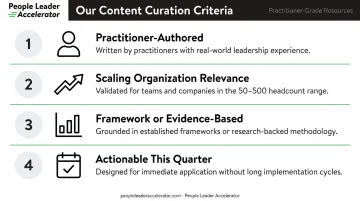
Every resource in this guide was evaluated against four criteria:
- Written by practitioners who have held the role — not just studied it
- Addresses the specific pressures of scaling organizations (50–500 headcount range)
- Offers frameworks or evidence, not just surface-level tips
- Connects directly to a decision or action you can take this quarter
One additional principle: build a diversified reading diet. The most effective HR leaders draw from research-backed benchmarks, executive news analysis, practitioner community dialogue, and structured capability tools — because each type of source answers a different kind of question. A benchmark tells you where you stand; a peer community tells you what's actually working on the ground. Both matter.
Must-Follow Resources for Strategic HR Leadership and People Operations
This category addresses the "big picture" questions: how to scale people operations, how to function as a true business partner, and how to design the HR function itself inside a fast-moving organization.
Blogs and Publications
AIHR Blog is the strongest single resource for structured, reference-grade HR strategy content. Co-founded in 2016 by Nando Steenhuis and Erik van Vulpen, AIHR now serves more than 85,000 HR professionals and alumni. Its content spans HR analytics, workforce planning, digital HR, and business partnering. It's most useful when you're building a business case and need frameworks — the kind of resource you reference repeatedly, not just skim once.
HR Bartender, written by Sharlyn Lauby (SHRM-SCP), bridges the operational and strategic sides of HR leadership. Lauby writes from the practitioner perspective of someone who has held the role — which means the content engages with the kind of real judgment calls that don't fit neatly into policy manuals. Useful for navigating the grey areas of leadership without losing strategic perspective.
HR Executive has been covering senior HR leadership since 1987 and remains the right source for VP- and CHRO-level perspective on workforce trends, total rewards strategy, and how people decisions connect to board-level priorities. It's news-oriented rather than instructional, which makes it complementary to deeper learning resources.
Practitioner-Built Frameworks and Downloadable Guides
Beyond blogs, scaling HR leaders benefit from structured, implementation-ready tools — guides and templates built for deployment, not just reading.
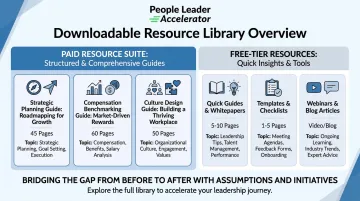
People Leader Accelerator's resource library fills that gap. The faculty behind it brings 25–30 years of experience in high-growth environments. Andrew Bartlow co-authored Scaling for Success: People Priorities for High Growth Organizations; Carmela Krantz has served as the first VP of HR at nine companies, six of them startups. The library covers topics directly relevant to organizations in scale-up mode.
Highlights include:
- Strategic People Planning – Full Guide ($500, 56 pages): Aligns HR priorities with business goals, with workforce planning templates built for scale
- Compensation Benchmarking & Leveling – Full Guide ($500, 36 pages): Covers compensation philosophy, benchmarking sources, and pay transparency
- Designing Organizational Culture – Full Guide ($500, 56 pages + 7-tab XLS): Research-backed frameworks for assessing and designing culture intentionally
- Free resources including a Strategic HR Planning Resource Package, 9-Box Template, and Communication Framework — available at no cost as practical starting points
Must-Follow Resources for Talent, Culture, and Employee Engagement
The human-centered side of strategic HR is where most scaling companies feel the most pressure. Culture erodes under growth if it's left unmanaged. Recognition programs that worked at 30 people don't scale to 300. Talent acquisition becomes a function unto itself.
Blogs and Publications for Culture and Engagement
Culture Amp's blog stands out for its research-informed approach to employee engagement. Their science team aggregates data from millions of employee responses (their 2024 engagement analysis drew from roughly 6,500 customers), translating that data into content that moves HR leaders from "I sense there's a morale problem" to "here's what's driving it." Worth bookmarking if you regularly need evidence to back an engagement recommendation to leadership.
O.C. Tanner's resource library (published through the O.C. Tanner Institute) is the most substantive resource for HR leaders building or rethinking recognition strategy. Their research frames recognition as a system requiring design and leadership buy-in, not a one-off program. That distinction matters when you're trying to establish culture deliberately in a scaling company. Their annual State of Employee Recognition report is worth reading in full.
HRZone covers the human side of work across change management, inclusion, and the complex people situations that don't fit standard playbooks. It has served the HR community for more than 25 years. Its "Any Answers" community forum is particularly valuable as a peer pressure-testing tool — useful when you're navigating something unusual and want to know how other practitioners have handled it.
Blogs and Publications for Talent Acquisition
ERE (Employment Recruiting Exchange) is the go-to for talent acquisition leaders who want practitioner-level, opinionated coverage of how recruiting is evolving. That includes direct takes on AI's impact on hiring, candidate experience, and the future of recruiting careers. ERE doesn't soften its positions, which is exactly what makes it worth reading.
Undercover Recruiter has covered employer branding and talent acquisition from a practitioner perspective since 2009. It shows how candidate experience actually plays out in practice, and how every touchpoint in the hiring process either builds or damages employer brand.
Must-Follow Resources for HR Analytics, Technology, and Future Trends
The expectation that HR leaders be data-literate and technologically fluent has shifted from a differentiator to a baseline. SHRM's 2025 research found that 29% of CHROs expected adapting to technological change to challenge their organizations in the coming year — a figure that underscores why staying current isn't optional.
Blogs for Analytics and Technology
AIHR's dedicated people analytics content is the most structured resource available for building analytics fluency from the ground up. It covers workforce metrics, data ethics, and how to use analytics to strengthen business cases with leadership. The AIHR people analytics guide treats this as a discipline with a defined methodology.
HR Dive covers regulatory changes, compensation trends, and workforce shifts in a concise, news-oriented format. Published by Informa TechTarget, it's written specifically for HR decision-makers who need to stay current on compliance and labor market developments without deep-dive reading time. Subscribe to their newsletter and you'll catch most of what matters in under ten minutes.
For hands-on analytics tools, People Leader Accelerator offers several resources worth bookmarking:
- HR Dashboard Sample (free) — visualizes headcount, labor spend, and productivity metrics across 13 months
- Cost of Turnover Calculation Template (free) — quantifies the financial impact of attrition
- People Analytics Full Guide ($500, 75 pages) — complete methodology for identifying high-impact metrics and building data-driven business cases
Staying Ahead of HR Trends
TalentCulture covers the intersection of HR, technology, and the future of work — including dedicated coverage of AI in hiring, skills-based talent strategies, and how HR technology is reshaping people operations. It reads as a practitioner community hub rather than a vendor publication, which means fewer product pitches and more applied perspective.
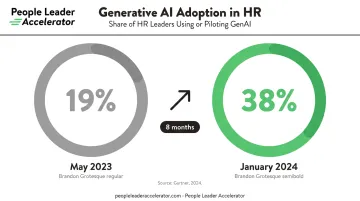
To put the pace of change in context: Gartner's January 2024 survey found that 38% of HR leaders were piloting, planning, or implementing generative AI — up from 19% just eight months earlier. That pace makes occasional reading insufficient. Building a short list of reliable sources you check weekly is a practical starting point.
People Leader Accelerator's alumni community runs an ongoing AI in HR workshop series where practitioners share real applications: building interview guides, generating compensation statements, and automating workflows with tools like Zapier and Granola.
These sessions are invite-only and community-driven, giving members access to applied knowledge that external publications rarely surface.
How to Build a Personal HR Learning Routine That Actually Sticks
Strategic reading only pays off when it's actually happening. Here's what works in practice:
Structure the week, not the intent. Designate three 15–20 minute reading blocks per week — one for each resource category in this guide (strategic HR, culture/talent, analytics/trends). Treat them like recurring calendar commitments rather than "when I have time" aspirations.
Choose one anchor publication per category. Following 20 blogs inconsistently produces less insight than following three consistently. Pick your anchor, subscribe to the newsletter, and let the rest come to you through community conversation or peer recommendations.
Keep an insight log. A simple running document — even a notes app — where you capture one actionable idea per reading session is worth more than highlighted articles you never return to. The discipline of writing one sentence about what you'll actually do with an idea forces application, not just consumption.
Combine self-directed reading with structured peer learning. Blogs surface ideas; applying them requires community, feedback, and context that publications alone can't provide. People Leader Accelerator's Mastermind Membership ($1,000/year for alumni) pairs monthly facilitated peer discussions with HR leaders from similar organizations — turning what you read into what you actually implement.
HR leaders who read consistently and test ideas against peers tend to close the gap between knowing and doing — which is where most professional development stalls.
Frequently Asked Questions
What are the 5 C's of HR?
The "5 C's of HR" isn't a single standardized framework; different practitioners define them differently. The foundational Harvard HRM model outlines four outcomes: commitment, competence, congruence, and cost-effectiveness. Variations that add culture, compensation, or career development are valid in practice, but treat them as source-specific frameworks rather than settled doctrine.
What is trending in HR right now?
The clearest current trends are: AI integration into HR workflows and hiring decisions, skills-based talent strategies replacing credential-based hiring, increased use of people analytics for executive decision-making, and the growing expectation that HR leaders function as genuine business partners rather than administrative support functions.
How do I stay current in HR without spending hours reading every week?
Follow a small number of high-signal publications organized by focus area, subscribe to their newsletters, and schedule three consistent 15–20 minute reading sessions per week. Sporadic deep dives don't compound — short, regular sessions do.
What types of HR resources are most valuable for leaders at startups and high-growth companies?
Practitioner-built resources focused on rapid headcount growth, compensation benchmarking, organizational design, and people analytics deliver the most value. Generic compliance-focused content rarely addresses the speed and ambiguity that high-growth environments demand. People Leader Accelerator's guides are built specifically for this context.
How do HR blogs differ from formal HR development programs?
Blogs are excellent for staying current and gathering ideas, but lack structured frameworks, peer accountability, and applied learning. Formal programs, such as People Leader Accelerator's expert-led curriculum and Mastermind Membership, provide those missing elements. The two work best together: blogs build awareness; programs build deployable skill.